Albert “Trebla” Donkor Is Curating the Future of African Sound
Long before rain. Labs, a known music marketing agency became a known name in emerging African music circles for its tailored and unique approach to marketing music, the CEO, Albert “Trebla” Donkor was already embedded in the culture as both participant and observer. From making music in his teenage years to directing videos for African artists moving through London, his career has been shaped by a consistent instinct: to connect dots between the continent and the world.
That instinct has since evolved into something more structured, making Rain Labs a platform that doesn’t just discover talent but contextualizes it. At a time when global attention on African music is growing, Trebla’s work sits at a critical intersection: part curator, part strategist, part archivist. He’s focused on building the infrastructure that ensures African music doesn’t just travel — it lands, resonates, and sustains.
What emerges through this conversation is a clear through-line: the work has always been about closing gaps. Between artists and opportunity. Between sound and context. Between Africa and the systems that have historically overlooked it.
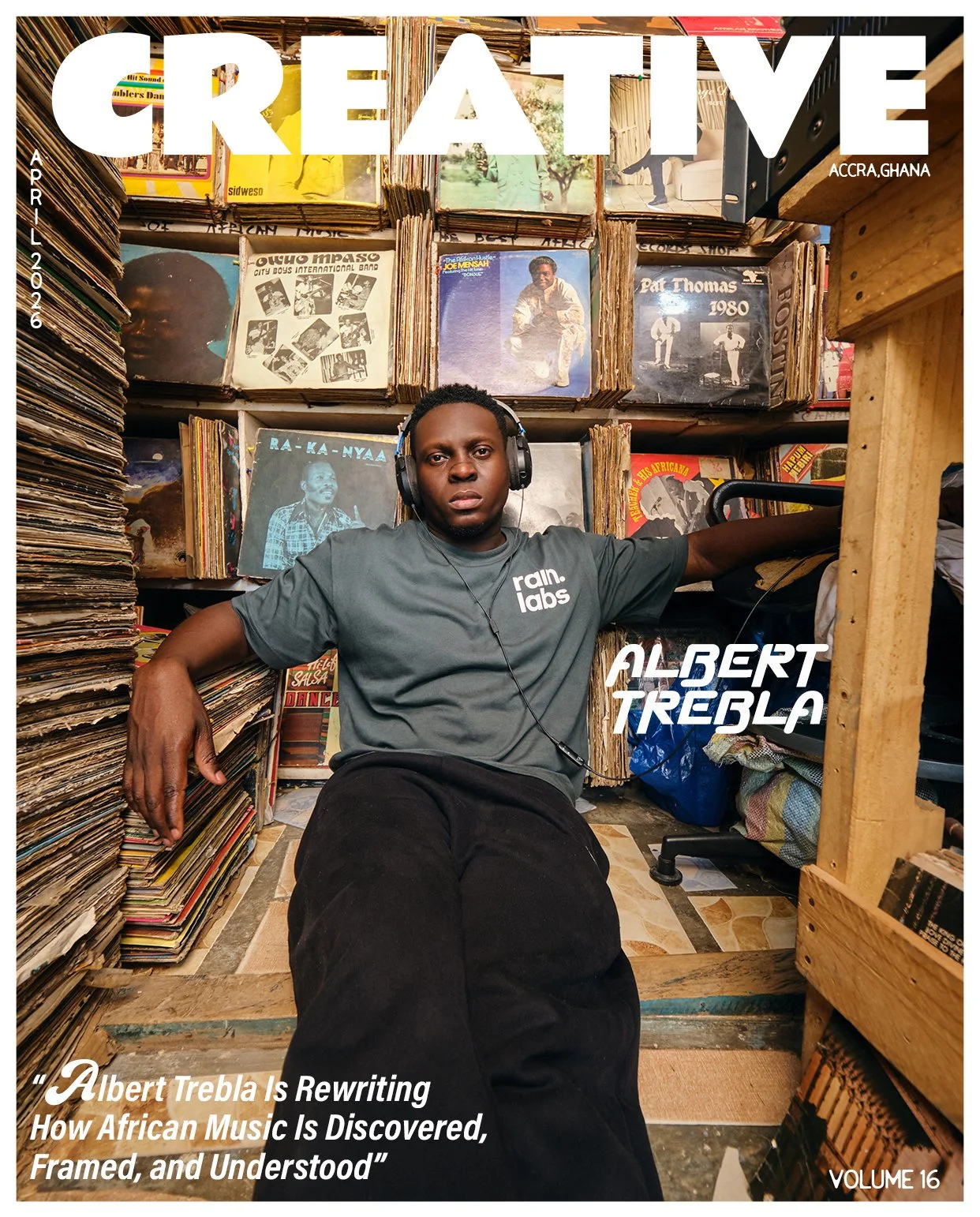
Before Rain Labs became a platform for discovering African music, what first drew you personally to the act of curating culture?
Honestly, it goes back much further than rain. Labs. Music actually found me around 2006, in high school. I was making and releasing music professionally, so I was always inside the culture, not just observing it.
But… moving to the UK shifted something in me. Being in a new environment, seeing how the industry operated at a different scale, I became genuinely fascinated by the business side of it, all the mechanics behind how music travels, how artists get positioned, how deals get made. That curiosity pulled me toward the infrastructure rather than the stage.
So by 2013/2014, when I was studying film in London, I started producing and directing music videos for African artists who were passing through the city whether for shows, meetings, or other business. That became my first real entry point into the curation side of things. I could see all these artists and how they were creating incredible work, and I wanted to document it, amplify it, and connect it to something larger.
That instinct to connect to find the thread between what's happening on the continent and how it resonates across the world that's always been the through-line and rain. Labs is just the most structured expression of something I've been building toward since I was a teenager.
What moment made you realize African music needed more intentional curation and storytelling?
London. My time in London being in university, on sets, around artists, I saw how differently the system worked compared to Ghana.
Back home, publishing wasn’t even part of the conversation. In London, I watched artists fund videos through PRS royalties. That was revenue that was already working for them. The more I learned, the clearer it became how much knowledge wasn’t reaching the continent. I started sharing what I was learning within my circle, and seeing the impact of that information is what lit the fire.
At the same time, there was still a stigma around African music. The assumption was that it wasn’t ready for the global stage — which was completely wrong. The gap was never quality. It was access to tools, networks, and platforms.
But there was something else bothering me too. This was early days before Afrobeats became a global conversation and there was a real stigma around African music in certain spaces. The assumption that if it came from the continent, it wasn't quite ready for the world stage. And that was just wrong. We have some of the most gifted creatives on the planet. The gap was never quality. It was always access to the right tools, networks, and platforms.
What we're seeing with Afrobeats now is the proof. The moment African music got genuine access to global infrastructure, it competed,and dominated. Someone had to start closing that gap and reframing the narrative. That urgency is really where everything I do now began.
The altÉ movement in Ghana has always existed slightly outside the mainstream. How do you define altÉ now versus when you first encountered it?
Alte movement basically was artists making sounds that didn't fit neatly into what was considered commercial on the continent and in Ghana at the time. Fusions of R&B, rap, alt-pop, influences from everywhere, music that felt global before the industry was ready to treat it that way.
When I first encountered that scene, it existed in its own pocket. Celebrated within a certain circle, but largely overlooked by the mainstream. And I think that's exactly what drew me to it, because the quality was undeniable, it just needed a different kind of push
But here's the thing though, I didn't set out to be an alté curator specifically. I don't think I have ever been one. We founded rain. Labs to focus on emerging African artists, and it just so happened that most of the emerging artists I was gravitating toward were making alté music. That's where the energy was… that's where the risk-taking was.
What's fascinating now is watching the alté movement essentially become the mainstream — see Tems/Burna Boy/Amaarae/Moliy as the extreme examples. The sounds that were considered too alternative, too fusion, too niche…those are the sounds shaping the direction of African music globally. In a way, alté didn't join the mainstream, the mainstream moved toward alté and that pattern tells you everything. The emerging scene has always been the leading indicator. The artists on the margins are usually just ahead of their time, and that's precisely why they deserve the most intentional support.
What does a typical “discovery process” look like for you when you’re searching for new artists or sounds across the continent?
Honestly, it starts with just listening - a lot of it. I'm constantly consuming music, whether it's something that surfaces on my social feeds, a recommendation from Spotify or Apple Music, or going deep into an artist's world and then following the thread to everyone who sounds adjacent to them. One artist leads to three more, and suddenly you're somewhere you never expected.
But some of the most valuable discoveries come through referrals. Someone will hit me and say "yo, you need to check her out, she's on the same wave as Mauimoon, Baaba J" and that kind of context is gold. When someone who understands the taste makes the connection, you already know it's worth your time. It shortcuts a lot.
Then there's the DMs and the emails. Artists pitching directly, putting themselves forward. People underestimate how much actually comes through that channel, we've discovered some of our most exciting artists that way - an example is Jiire Smith. He believed in his music enough to reach out across our dms, emails and even our comments section on other artists posts, and that energy tells you something too.
There's no single formula. It's part discipline, part instinct, part community. The continent is producing so much right now that the discovery process never really stops, you just have to stay in the stream.
You’ve staked your career on spotting talent early. When you first encounter an artist, what are you actually listening for? How do you know what a good sound is, or what the right sound is?
The first thing is always feeling. That's really the core of all of this: how does this music make me feel?
If someone puts words on a beat in a way I genuinely haven't heard before, and it moves something in me, that's the first green light. You can't fake that response and you can't manufacture it. It either lands or it doesn't. But… feeling alone isn't the whole picture. My palette is wide. I listen to everything across genres, cultures, eras and that breadth is what allows me to contextualise a sound. To understand not just whether it's good, but where it could live. There's no such thing as a universally "right" sound. Music taste is shaped by upbringing, by exposure, by lived experience. My job is to understand those different rooms and know which sounds belong in which ones.
What I'm really asking when I hear something new is — can I imagine this on BBC Radio or KIIS FM? Export potential is a huge part of how I evaluate music. I lean toward artists whose sound has the capacity to travel, to resonate beyond the local market. Not because local doesn't matter, but because that's the gap I've always been most interested in closing.
And then there's the honest, practical question: can I actually market this? I could hear a rock record I genuinely love, but if I don't have the network, the channels, or the resources to do it justice, that has to factor in. Signing or championing an artist is a commitment, and passion without the infrastructure to back it up doesn't serve anyone.
What is something you’re currently paying attention to in African music that most people haven’t noticed yet?
One thing I'm investing serious energy into right now is sync — building a real, dedicated channel for African music in film, TV, advertising and gaming. It's not that people haven't noticed the opportunity, but very few are actually doing the work to structurally connect African artists to that pipeline in a meaningful way. The artists in our space are incredibly ‘syncable’. They are sonically versatile, emotionally rich, globally palatable…and the demand from music supervisors for fresh, non-Western sounds is genuinely growing. That intersection is where I'm focused.
But the broader thing I'm paying attention to is how the next wave of African artists are building. There's a generation coming up that understands the global system from day one. They're thinking about publishing, about sync, about brand partnerships before they even have a debut project out. The knowledge gap that existed even five years ago is closing fast, and the artists who are benefiting from that are arriving more prepared, more strategic, and more ownership-minded than any generation before them.
The infrastructure is still catching up. But the artists aren't waiting for it anymore. They're building around it, through it, despite it. And that shift from waiting for the industry to come to us, to going out and building the channels ourselves…that's what I find most exciting about where we are right now.
You are known for being selective with working with artists and projects… focusing on only what you are truly passionate about. How do you actually make that call? What makes you say yes to an artist?
It circles back to everything I said about marketing. If I love the music, I can champion it authentically in rooms, in conversations, in pitches. That genuine belief is the foundation. Without it, you're just going through the motions, and people can feel that.
But the second question is just as important: does this artist want it more for themselves than I want it for them? Because I will go all the way. I will push doors, spend resources, spend energy. And if the moment comes to really show up and the artist doesn't match that, that's a real problem. So I research everything. I'm building a picture of who this person actually is, not just who they are in the room trying to make a good impression.
The thing I look at most, though, is the team. You cannot do this alone, and the artists who understand that early are the ones who tend to go the distance. If someone doesn't have a team yet but shows structure and self-awareness, I'll work with that. But if there's a team in place with a bad reputation, I've said no to genuinely great artists because of it. The music can be exceptional and the deal can still be wrong.
That said, I can't treat this entirely like a checklist. Music is spiritual. Sometimes you go against logic and say yes anyway because something tells you to. If the rain. Labs team believe in an artist and I'm on the fence, we move forward. If the team feels it, that carries real weight with me too.
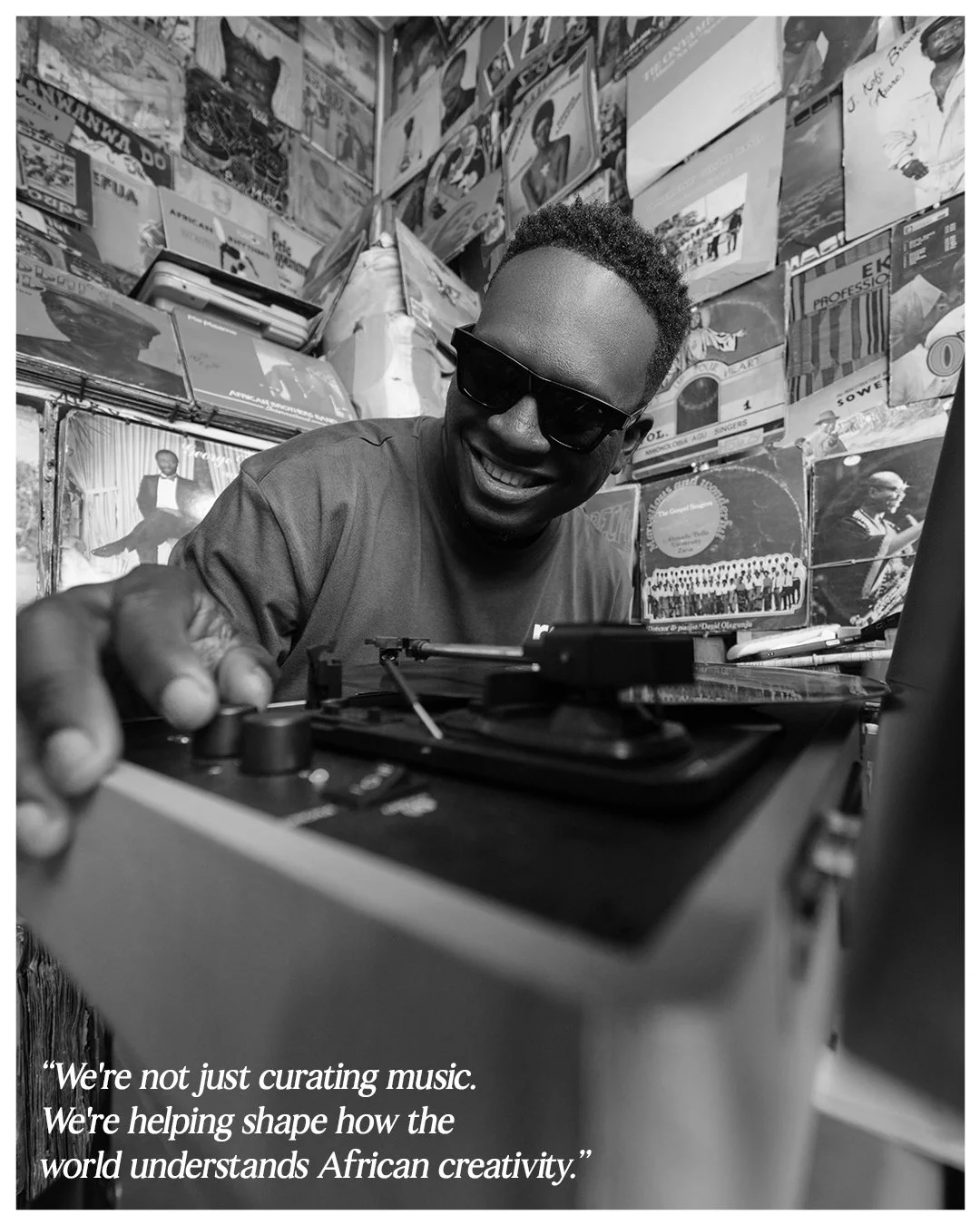
What keeps you curious about music after all these years of listening and discovery?
Honestly, it's the new sounds. Every year, artists come out of our space bringing something genuinely fresh whether they're building on something familiar and pushing it somewhere new, or arriving with a sound you simply weren't prepared for. That continuous innovation never gets old. The continent keeps producing, and the creativity never plateaus, so neither does the curiosity.
But the other side of it is film. I've always lived in both worlds, and the way music functions in a visual context is a completely different kind of fascination. How a piece of music can completely transform a scene, carry an emotion that dialogue can't, or make a moment feel universal—that relationship between sound and image still excites me in the same way it did when I was a student making videos in London.
In your opinion, what role does curation play in shaping culture, especially in a digital world where everyone has access to everything?
The digital world solved access. Anyone can upload music, anyone can find it, anyone can build an audience from their bedroom. And that's genuinely remarkable. But access to everything also means attention is the new scarce resource and that's exactly where curation becomes more important, not less.
Curation in a digital world is really about context. It's the difference between music existing and music meaning something. When I champion an artist, I'm not just sharing a link, I’m framing a story, making a case, connecting dots between a sound and the culture it came from and the rooms it deserves to be in. That's what moves people from passive listeners to genuine believers.
I've also seen what happens when curation is done right. The alté movement is a perfect example. Those artists existed, and the music was there but, intentional curation helped shape the narrative around it, and now, what was once considered alternative is defining the mainstream.
That's what keeps me invested in this work. In a world where everyone has access to everything, the curator's job isn't to be a gatekeeper anymore. It's to be a guide and, right now, with everything coming out of Africa, that role has never mattered more.
Ghana’s creative scene is clearly having a moment globally, but what’s still broken or missing that people on the outside don’t see?
From the outside, it looks like Ghana's creative scene is firing on all cylinders right now and in many ways it is. But there are real structural problems that the global narrative doesn't capture.
The first is that the industry still moves in silos. There are incredible movements, incredible specialists doing important work in their lanes, but we haven't fully aligned around the one common mission that should unite all of us, which is exporting our culture and our sound to the world. Collaboration across the ecosystem is still inconsistent, and that fragmentation costs us.
But the deeper issue is infrastructure — local infrastructure. When you look at where the highest levels of investment in Ghanaian artists have actually come from, it's foreign labels, foreign agencies, foreign platforms. Not us. And that's a problem, because when the infrastructure that elevates your artists isn't homegrown, you don't fully control the narrative, the terms, or the long-term direction.
Things are moving fast. The global appetite for what we're creating is real and it's growing. But our policies aren't keeping pace. The frameworks that govern the industry are lagging behind the actual speed of the market, and the people who have the power to drive meaningful change from the top are too often resistant to adapting. That gap between where the industry actually is and where the decision-making still sits—that's what concerns me most.
Talent has never been the problem. It never was. We have the best talent that could go toe to toe with a lot of international stars. But talent without the right local infrastructure, without aligned investment, without policies that reflect the moment we're actually in…that's how we leave value on the table. And right now, we're still leaving too much on the table.
What do you think the global audience still misunderstands about African music scenes beyond the mainstream genres?
The biggest misunderstanding is also the most persistent one: the assumption that African music is Afrobeats. That's it. That's the box the world has put us in, and while Afrobeats deserves every bit of its global moment, reducing an entire continent's creative output to one genre does real injustice to what's actually happening across Africa.
Think about what that framing erases. Africa is 54 countries, hundreds of languages, thousands of years of distinct musical traditions and an incredibly diverse contemporary scene built on all of that. There are artists making alternative music, experimental sounds, folk-influenced work, jazz, gospel fusions, hip hop rooted in local languages and local realities. Artists who are every bit as talented, every bit as innovative, but who exist outside the one genre the global industry has decided to pay attention to.
The danger isn't just that these artists get overlooked. It's that the infrastructure, the playlisting, the editorial attention, the label interest…it all gets funnelled toward what fits the Afrobeats label. Everything else struggles to find its lane internationally, not because the quality isn't there, but because the world hasn't built the context to receive it yet.
That's a huge part of why intentional curation matters. Someone has to keep expanding the frame. Because the moment the global audience starts to look beyond the mainstream, what they'll find is that Africa has been sitting on an extraordinary range of sounds the whole time. The continent was never just one thing. It never will be.
How do you balance taste-making with responsibility, knowing that platforms like yours can influence what people listen to next?
The responsibility has always been there. I just think about it differently than the word “taste-making” might suggest. I'm not trying to tell people what to like. I'm trying to make sure the right music finds the right ears, and that the artists who deserve a shot actually get one.
But that does come with weight. When you have a platform, when labels and DSPs and editorial teams are paying attention to what you're championing, you have to be honest about the influence that carries. A co-sign from rain. Labs can open a door for an artist. It can also set an expectation. So the responsibility starts before I ever put anything out. It starts in the decision of what I say yes to.
That's why I've always been selective. Not for the sake of being exclusive, but because championing something half-heartedly is worse than not championing it at all. If I put my name and my platform behind an artist, I'm making a promise to them, to the audience, and to the culture. I take that seriously. At the same time, I try to stay honest about the fact that taste is never objective. My palette, my upbringing, my exposure…all of that shapes what I hear and how I hear it. So I lean on the team, I listen to referrals, I stay in the stream. No single perspective should have too much control over what gets elevated.
The balance for me is this: lead with genuine feeling, stay accountable to the artist, and always keep the bigger picture in mind. We're not just curating music. We're helping shape how the world understands African creativity.
For a young Ghanaian who wants to work in the music business not as an artist, but on the business side, what’s the most honest advice you’d give them right now?
The first thing I'd say is know yourself and be honest about where you'd actually enjoy working. The business side of music is not one thing. There's A&R, management, sync licensing, publishing, marketing, brand partnerships, live—and a lot of young people either don't know these lanes exist or don't realise they're already naturally operating in one of them. I've met people doing brilliant A&R instinctively who didn't even know there was a name for what they were doing. So start there. Figure out where your instincts already live.
And honestly, the best entry point is often right in front of you. Which artist in your circle do you genuinely believe in? What's your most valuable skill—writing, marketing, relationships, social media—and how can you apply it to help that artist grow? Start there. Learn on the job. Build a real track record around something tangible before you go looking for a title.
Also look at where the gaps are, because there are still wide open spaces in the Ghanaian market. Sync licensing is massively under explored. Publishing is still largely untapped locally. These are areas where you can come in, learn deeply, and genuinely own something because not many people are there yet. That kind of positioning is worth more than fighting for crowded space.
Which brings me to the longer-term advice. Make sure whatever you build belongs to you, not to the company or the artist you're attached to right now. Your knowledge, your network, your reputation, those travel with you. A role doesn't.
Be careful how you end relationships too. This industry is smaller than it looks, especially in Ghana. Someone you part ways with badly today can end up in a room that matters to you tomorrow. You don't have to agree with everyone—but do it honourably.
And build relationships on genuine trust, not on what someone's role is in the moment. The person who can't do anything for you today might be the most important person in your world in three years. That's just how this industry works.