Why Ghana Is Finally Listening to Itself — The future is exciting
You know that feeling of being a guest in your own home? No, you probably don’t… but for a long time, that was the reality of the Ghanaian music scene. We’ve often joked about being the "siblings" of Nigerians, but for years, we were the siblings watching from the hallway while the older ones threw the loudest, most exciting party in our living room. Nigerian sounds didn’t just visit our charts; they moved in, unpacked their bags, and took over the remote.
While there is—and will always be—love for the magic our neighbors produce, the imbalance was hard to ignore. We were consuming everyone else’s stories while our own sat on the shelf. But if you’ve had your ear to the ground over the last few years, you’ll notice the frequency has changed. Last year was the most evident proof. Something is clearly shifting, and Ghana is finally beginning to soundtrack its own story with its own voices.
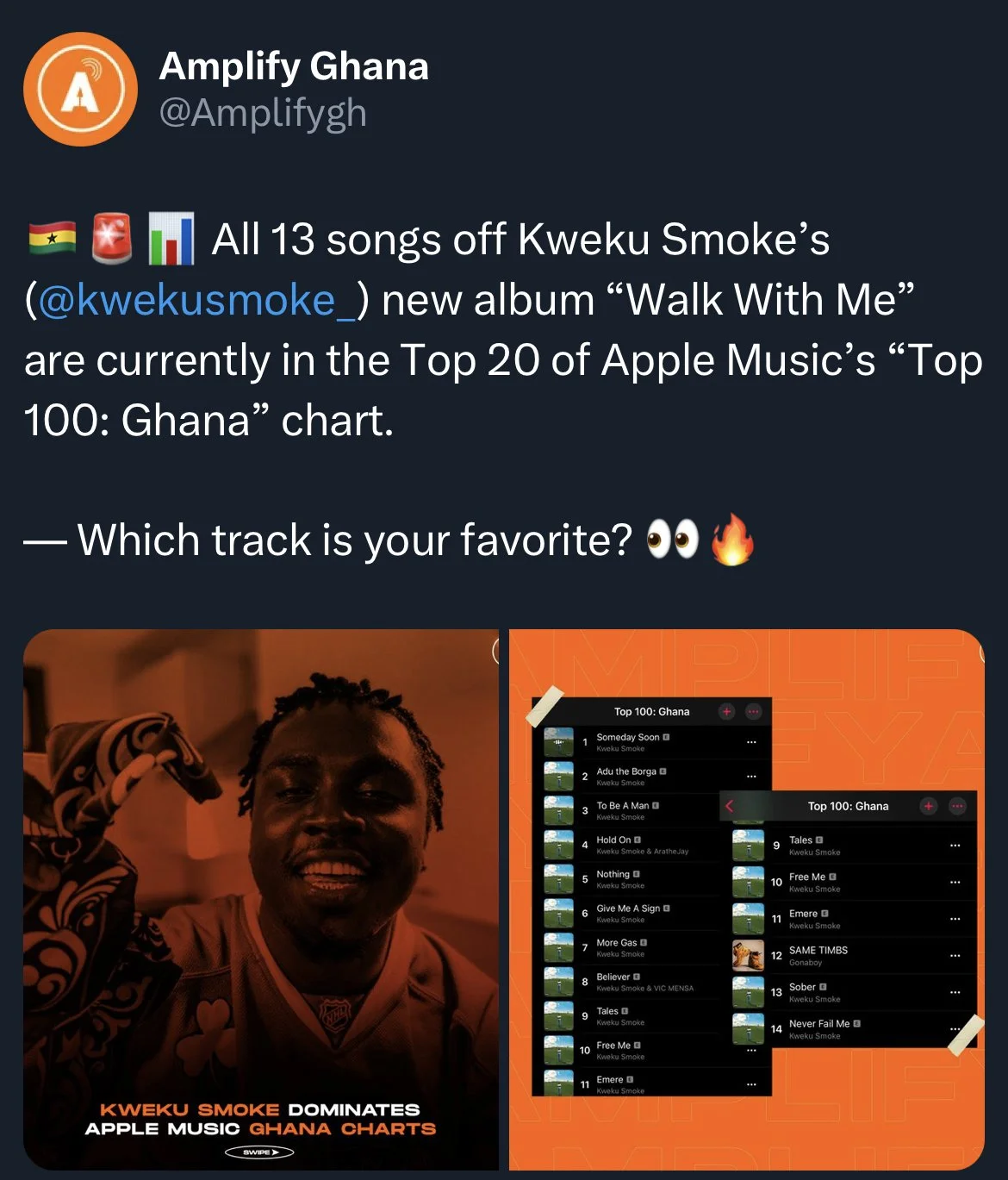
Throughout 2025, streaming charts consistently revealed that Ghanaian artists had reclaimed the Top 100 charts. They weren't just occupying one or two fluke spots; they were literally covering the Top 10s on the board. We saw songs from Kweku Smoke, Beeztrap, KiDi, Arathejay, Black Sherif, and others take turns occupying the summit for weeks at a time. By the end of the year, it became obvious that we aren't just "supporting our own" out of a sense of duty anymore; we are genuinely obsessed. Reports from the Labari Journal indicate a staggering 60% surge in domestic music consumption.
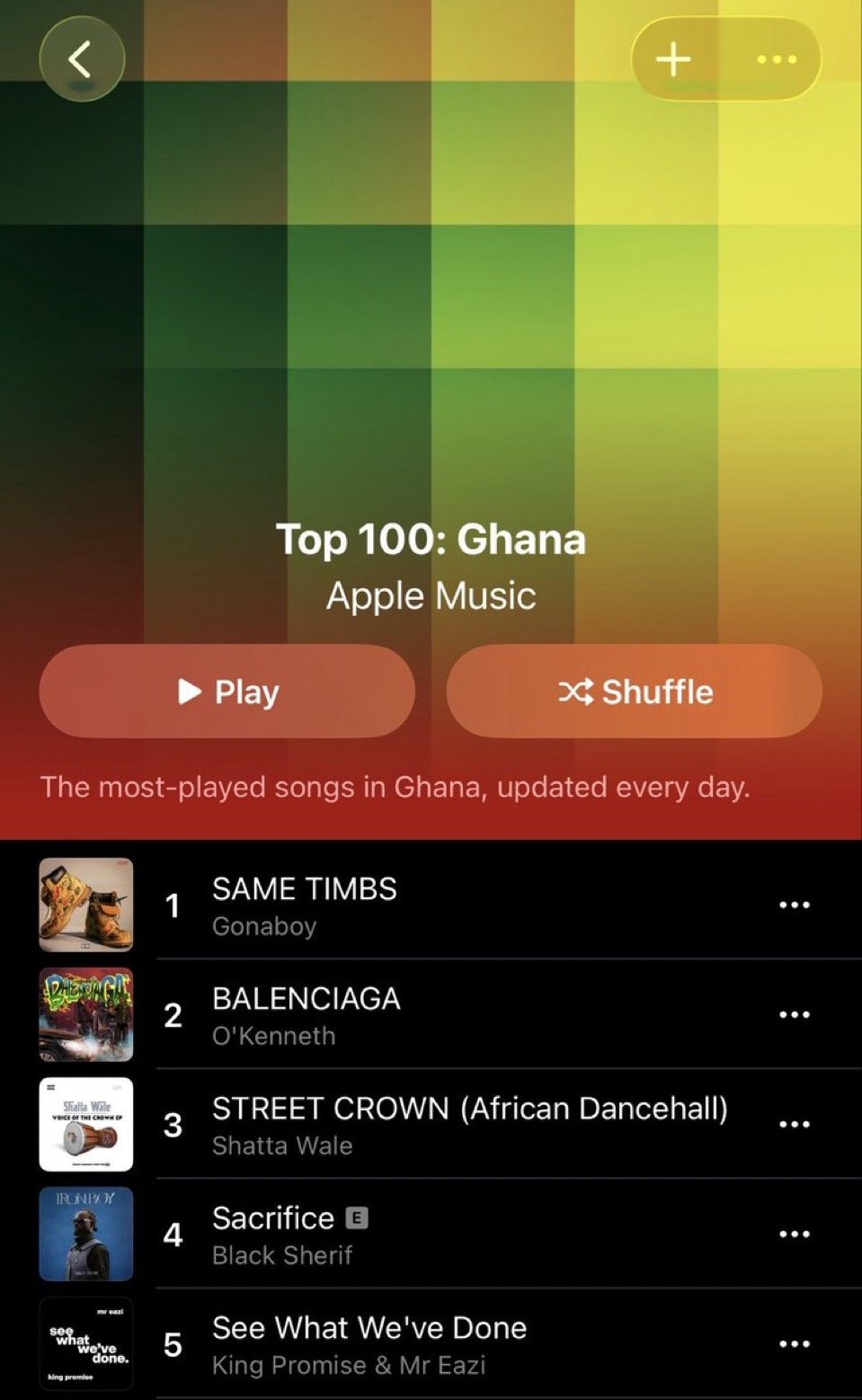
What makes this moment so distinctive isn't just the "who," but the "why." Like I keep saying, Ghanaian audiences have a refined palate for the raw. We’ve always craved authenticity—that gritty, unpolished honesty that feels like a conversation on a street corner rather than a rehearsed performance. The charts finally prove this.
Take Black Sherif, for example. He didn’t just "break through" with a hit song; he forged a visceral, emotional pact with his listeners. His rise, much like the explosion of the Asakaa scene, felt inevitable because it gave a microphone to the frustrations and ambitions of a generation. Now, he holds the record for the most streamed songs in the country, with tracks from his Iron Boy album dominating the Top 10 slots overall in 2025. Then you have acts like Arathejay, who are quietly building cult-like followings. They aren’t relying on manufactured hype or "pay-to-play" algorithms; they are winning through genuine resonance—taking their time, yet sure of their journey. We are finally drawn to music that mirrors our own realities: the heartbreak, the hustle, the resilience, the love, and the occasional humor that keeps us going.
This cultural renaissance didn't happen in a vacuum. It is necessary to remember the campaign propelled by a group of "cultural evangelists" who refused to accept the status quo. Figures like Smallgod, DJ Mensah, Reggie Rockstone, and Gomski of Crux Global have been relentless, championing Ghanaian music not as a passing trend, but as a vital necessity. I remember when the "Play Ghana" mantra first started gaining steam; it was met with significant pushback from some DJs and media personalities who argued that Ghanaian music wasn't "mainstream enough" for certain settings. Now, look at us—singing Black Sherif bars word-for-word in the club.
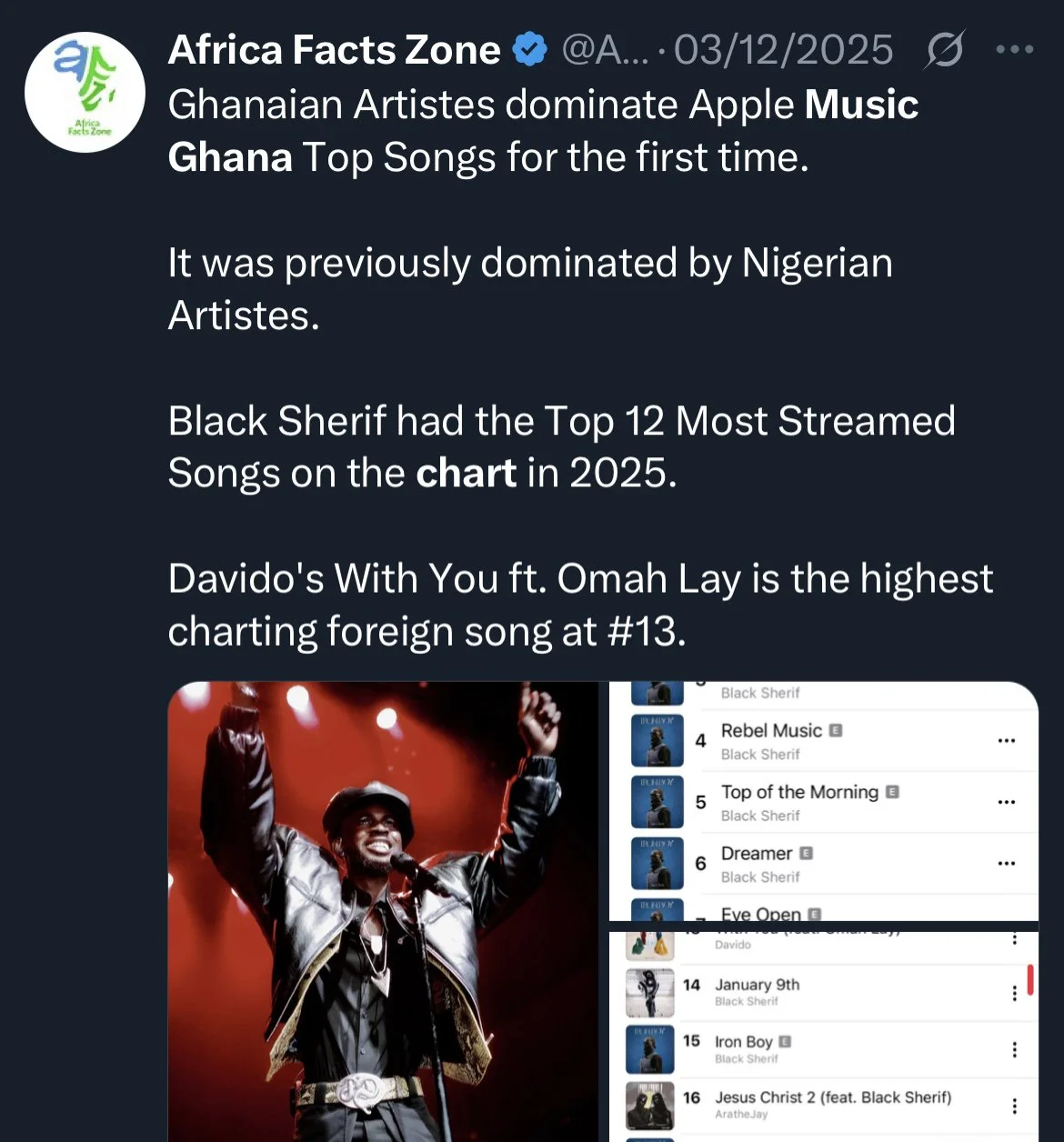
Culture is rarely transformed by algorithms alone; it is shifted by passionate advocates who inspire belief. That persistence has slowly rewired our collective listening habits, influencing both the artists and the fans. Smallgod, DJ Mensah and others stuck to the script: "Play Ghana" no matter the setting. Include it. Just play it. And now we are celebrating the result: in 2025, Ghanaian music consistently topped the Apple Music charts on its own merit.
The ecosystem is maturing, too. The music is diverse, and it’s all finding a place in the mainstream. Take Moliy, who’s been racking up global viral numbers with "Shake It to the Max." Or Kojo Cue, who continues to evolve alongside his audience, proving that you don't have to chase trends to remain essential. And of course, Black Sherif remains omnipresent, not because he found a "formula," but because his storytelling has become the heartbeat of the Ghanaian emotional landscape.
For years, we were exporters of talent who waited for regional validation before we truly clapped for our own. There was a time when a significant portion of our streams actually came from outside our borders because we were more receptive to imports than our own exports. That psychological hurdle is finally being cleared, albeit gradually.
The future of Ghanaian music is exciting, not because the talent is suddenly "better"—the talent has always been there—but because it is finally being heard on its own terms. We are reaching a tipping point where local music isn't just competitive; it’s dominant. And it’s happening by choice, not by force.
Perhaps that is the real milestone. It’s not just about when Ghanaian music becomes a global phenomenon (though that is well underway); it’s about the moment we fully embraced the truth that our sound, our stories, and our voices are more than enough.
And you know what? Now that Ghana has decided to listen to itself, the rest of the world has no choice but to listen, too. We can see it in real-time with the way R2Bees’ "Over" is currently moving on TikTok. We cannot wait to see what the rest of this year looks like for our music.