Inside Ebeneza Blanche’s Visual Practice
Born in the Netherlands, raised partly in Ghana, and later living in the UK while moving between Ghana and Europe, Ebeneza Blanche’s creative practice is informed by a constant awareness of environment, people, and emotional context. That lived hybridity shows up not as aesthetic excess, but as restraint: a calm structure paired with warmth, rhythm, and instinct.
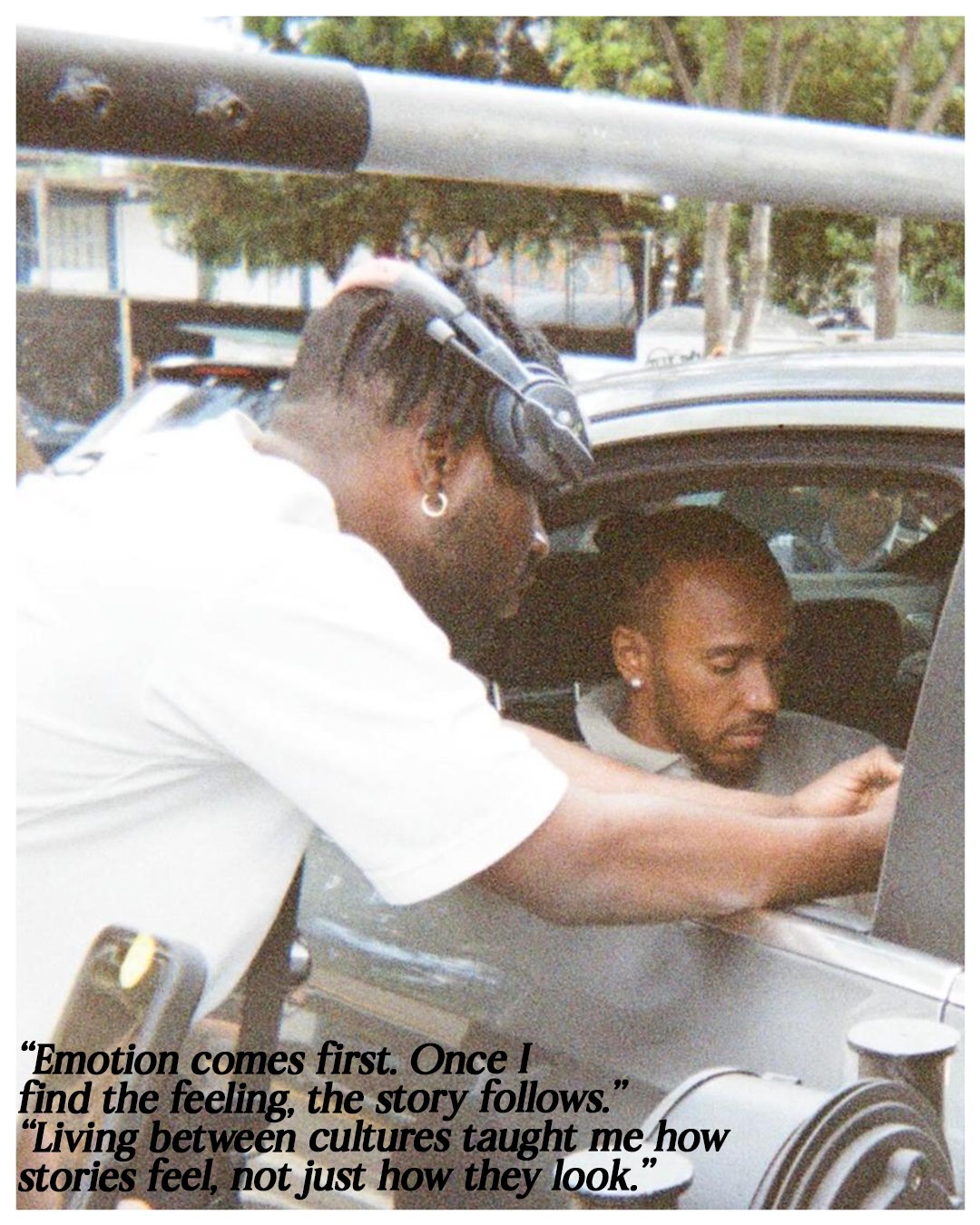
Instead of solely using Ghana as a visual reference, Blanche conveys its essence through tone, energy, and process. His work embodies the values of family, community, and discipline—qualities nurtured during his school years in Ghana. These themes are vividly expressed in projects like Mathlete, a short film directed by Ebeneza that delves into the boarding school experience in Ghana, exploring childhood pressures, moral instruction, and identity with clarity and honesty. Emotion leads his storytelling, guiding how scenes are framed, how colour is felt, and how rhythm is built in-camera long before post-production begins.
In projects like British rapper, Little Simz’ Point and Kill music video, Blanche balances his cultural roots with new visual languages by studying his heritage and drawing inspiration from it while focusing on evolving these elements through his imagination. He insists he does not aim to recreate the past; instead, he strives to create images that resonate with the present, across fashion films, narrative work, and brand collaborations. And the result? Work that feels grounded yet current, shaped by instinct, protected by authorship, and driven by a desire to empower the next generation of African creatives with both vision and knowledge.
We had a conversation with him about his work, his thoughts on sucess and how he maintains consistency in his work, across fields:
How did your early experiences across different countries shape your voice as a filmmaker and visual storyteller?
I was born in the Netherlands, then moved to Ghana as a child. Later, I relocated to the United Kingdom, and now I move between the Netherlands and Ghana. Living across different cultures shaped me in a very natural way. It opened my eyes to different ways of living and seeing the world. It made me more observant and deeply aware of people and their environments. That variety shaped my visual instincts and gave me a broad understanding of how stories can feel.
How do you maintain authenticity while working with major brands and global artists?
I stay true to my instincts. If something feels off culturally or visually, I speak up. I do it respectfully, but I protect the integrity of the work. Brands come to me for my creative voice, so I keep that strong. When I work in Africa, I take personal responsibility to ensure everything meets my expectations. That keeps the work honest.
What limitations still face African creative directors, and how are you actively responding to them?
The biggest limitations are infrastructure and access to knowledge resources. There is a huge amount of talent in Africa, but the support systems are not always ready. I respond by creating my own path and learning from every environment I work in. I share what I learn and try to open doors for others, so the next generation has a stronger foundation.
Which project best captures the influence of moving between cultures in your work?
It happens often. My work benefits from my exposure to different environments. I combine the calmness and structure I learned in Europe with the energy and spirit I know from Ghana. This mix influences how I frame shots, build atmosphere, and guide movement. It creates a rhythm that reflects my life journey.
What story about Ghana or West Africa do you feel still needs to be told?
We still need to explore the deeper history of Ghana. There are many stories connected to our past that deserve more attention—stories of slavery, migration, and how our natural resources shaped the world. Our culture is rich, layered, and full of wisdom, yet much of it has not been documented with care. There is a powerful archive of memory and experience that future generations can learn from, and those stories deserve space in the global conversation.
How do you define success at this stage of your career?
Success for me is about empowerment. I want the next generation to have the right knowledge and a strong foundation. If my work helps others grow, feel inspired, or believe in themselves, then I consider that success.
How do you personally measure growth as a creative today?
I measure growth by how much I learn from each project—how my ideas develop, how my emotional awareness evolves, and how brave I am in my choices. If I can keep surprising myself and stay connected to my intention, then I know I am progressing.
Can you recall a moment when you broke a creative rule to protect your vision?
When I shoot in Africa, I often adjust the plan instantly. I trust my instincts and step in when something needs to be done differently. I guide the process so the project stays aligned with my vision. These moments are not planned, but I know when the work requires it.
What medium or creative experiment excites you most right now?
I am very interested in artificial intelligence at the moment. I am exploring how it can work with film and open new creative paths. I want to see how technology can push my storytelling into new spaces.
What usually comes first for you when developing a new concept?
Emotion always comes first. I need to understand the feeling I want to communicate. Once I know the emotional core, the story and visual direction grow naturally from there.
How do you maintain personal authorship within large collaborations?
I stay rooted in intention and clarity. I take time to understand the purpose of the project and the truth I want to express. When I am clear internally, collaboration becomes easier. Creative authorship is not about controlling everything—it is about holding the spirit of the idea and carrying it with focus until the end.
What do fashion film and narrative cinema teach you about each other?
Fashion allows characters to express confidence, identity, and presence. I always try to show people of colour in their best light. Narrative cinema allows me to explore emotion, intention, and humanity. Together, they guide me toward a deeper understanding of how stories move people.
How do you build your colour language and pacing across projects?
I build rhythm while shooting. I feel the flow of the scene in real time, so editing becomes refinement rather than discovery. My colour approach is instinctive—I know the tone before the camera rolls.
What advice would you give young creatives who feel limited by geography or resources?
Believe in yourself and commit to your vision. You do not need perfect conditions to begin. Start with what you have, grow step by step, and trust that your ideas have value. Possibility begins with intention.