The Boateng Brothers: From Ghanaian Roots to the Heart of UK Music
There is something interesting about people who understand culture before they ever learn how to explain it.
Meet Alec and Alex Boateng, two Ghanaian-British brothers who turned their roots in DJing and underground culture into careers at the highest levels of the global music industry.

The Boateng Brother (Image source: Instagram)
Alex and Alec Boateng grew up in East London at a time when the city's music was finding new language. They were DJs, they made mixtapes, moved through radio and eventually into the machinery of the music business. Their story would eventually take them from the underground to some of the biggest record companies in the world, but the thread running through it has remained surprisingly consistent: a belief in the culture before the culture becomes obvious.
The brothers first made impact with Split Mics, a mixtape project they put together in 2004 featuring artists including Kano, Estelle and Lethal Bizzle. It became an underground success and helped open the door to careers that would take them into A&R, radio, marketing and major-label leadership.
Alec went on to work at Ministry of Sound and Atlantic Records, as well as spending years at BBC 1Xtra. His A&R career brought him close to artists including Stormzy and Burna Boy, among others. Alex on the other hand, spent a decade at Universal Music UK, eventually becoming President of Island Records' Urban Division, where he worked across campaigns involving artists including Drake, The Weeknd, Giggs, Tiwa Savage and others.
Then, in 2020, the twins came together for perhaps their biggest move yet: 0207 Def Jam.
The label was launched as the UK home of the legendary Def Jam Recordings, with Alex and Alec installed as co-presidents. It was a significant moment not just because of the size of the institution they were now leading, but because of what they represented within it: two Ghanaian-British executives who had come through the culture themselves, rather than observing it from a distance.
Music industries are often very good at recognising culture once it has become commercially undeniable. The harder part is recognising it early, understanding why it matters and knowing what to do with it without stripping away the thing that made it interesting in the first place.
Alex has spoken about the importance of creating an environment where artists feel that the culture is genuinely understood. In discussing 0207 Def Jam, he talked about wanting to build a label that could compete on service, while retaining an “undiluted culture.”
That idea feels particularly relevant now.
The global music industry is increasingly interested in African music, African fashion and African culture. But interest is not the same thing as understanding. There is a difference between recognising that something is commercially valuable and understanding the social world that produced it. The Boateng brothers' careers are interesting because they have spent decades moving between those worlds.
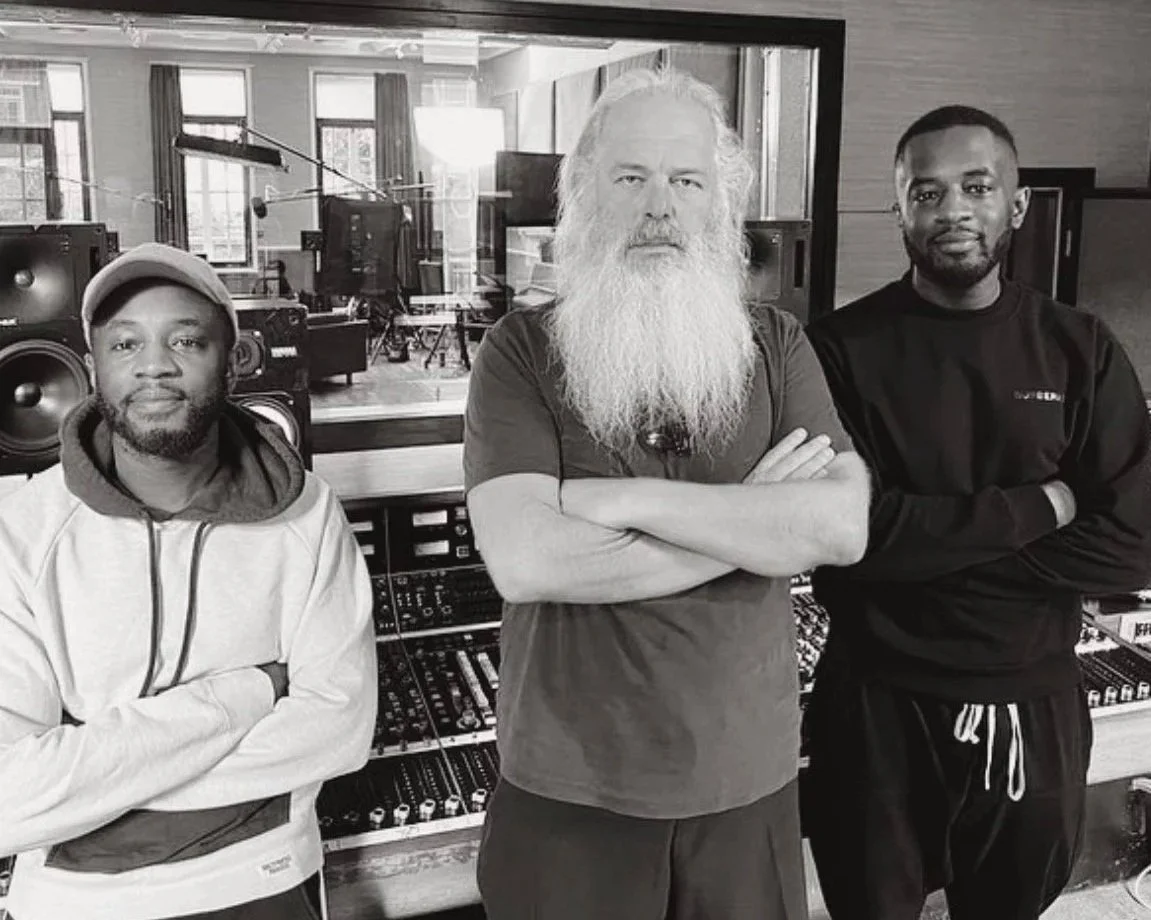
The Boateng brothers with Rick Rubin (retrieved from Instagram)
Their Ghanaian heritage exists alongside their British upbringing, their understanding of Black British music alongside their experience inside major labels. They have had a foot in the rooms where culture is created and another in the rooms where decisions are made about how that culture reaches the world and perhaps that is the more useful part of their story for a younger generation of African creatives.
You don't necessarily have to choose between culture and commerce.
You can understand the street and understand the boardroom. You can know the song before it is a hit and still understand the campaign that will make people care about it. You can be deeply rooted in where you come from without limiting yourself to one geography. Alec once described music, art and artists as things that “really, really matter.” That may sound obvious, but it is actually a useful philosophy for anyone working around culture. The business exists because the culture exists first.
For Ghana, there is another layer to the story.
The Boateng brothers are part of a wider generation of Ghanaians and people of Ghanaian heritage who are occupying increasingly influential positions across global creative industries. Their success does not necessarily have to be measured by how often they talk about Ghana or how many Ghanaian artists they sign. There is value simply in seeing people with Ghanaian roots operating at that level…making decisions, building institutions and shaping what global audiences hear.
Sometimes pushing culture forward means being the person on stage. Sometimes it means creating the platform, making the introduction, signing the artist, funding the idea or being the person in the room who understands exactly why something matters.
Alex and Alec Boateng have spent much of their careers being that person.
And perhaps the most interesting chapter is still the one being written.